How a K-pop comeback actually works — teaser to charts, the whole machine explained
A 'comeback' isn't just a new song. It's a 4–6 week machine of teasers, an album with five versions, mass pre-orders, music-show promotions, and a first-week sales war. Here's the map.
The word "comeback" confuses every new fan, because in K-pop it doesn't mean a group returning after a hiatus — it means any new release, and it triggers a machine that runs for weeks with a very specific choreography. Understanding the machine explains almost everything else: why there are five versions of the same album, why fans buy multiples, why there's a "first week" that matters so much, and why the group is suddenly on six TV shows.
This is the map. Each stage links to its own guide.
The comeback timeline, stage by stage
| Stage | Roughly when | What's happening |
|---|---|---|
| Announcement + scheduler | D-30 to D-20 | A "comeback D-day" poster; the promo calendar drops |
| Teasers | D-20 to D-1 | Concept photos, tracklist, highlight medley, MV teasers |
| Pre-orders open | ~D-20 | The album (in its many versions) goes on sale — this is where first-week sales are built |
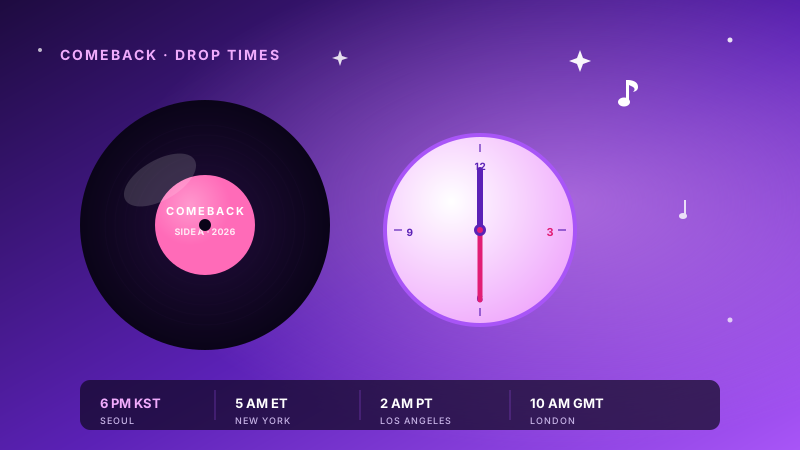
| Release day | D-day | Album + MV drop (timing matters — see drop times in EST) |
| Promotions | D-day to ~D+28 | Music-show stages and the weekly #1 race |
| Charting | Ongoing | Hanteo (first-week), Circle (official), streaming charts |
Why the album is the engine
Almost every strange-looking fan behavior traces back to the album being the engine of the whole thing:
- Multiple versions and random photocards are why fans buy more than one copy — the versions/POB guide explains the mechanic.
- Mass pre-ordering front-loads first-week (초동) sales, which become the headline number and feed the chart rankings.
- Physical sales are a big slice of the music-show scoring, so buying albums literally helps a group win #1.
For international fans specifically
Two practical threads run through all of it: you'll be pre-ordering from abroad (which store, which POB, shipping), and the release timing is set to Korea, so a US fan needs the drop times converted to EST. The bigger signal-reading — like guessing when a comeback (or tour) is coming — is its own thing: reading HYBE tour signals from comebacks and BTS comeback windows.
Last verified: July 2026. Comeback choreography varies by agency and group size, but the teaser → pre-order → release → promotion → chart shape is the industry standard.