How to actually use a K-pop comeback schedule — turn a date into a preorder, a vote, and a chart
Knowing the comeback date is the easy part. Here's the three-week playbook that turns one date on the calendar into an album that arrives on time, a vote that counts, and a first-week number that moves.
A comeback date is the least useful number on the whole schedule. By the time "6 PM KST" arrives, every decision that actually decides whether your album shows up on time, whether your vote counts, and whether the song charts has already been made — days or weeks earlier. The date is a deadline, not a starting gun.
So the useful way to read a comeback schedule is backwards. Start from the date, count the windows around it, and know what each one is for.
The three windows that actually matter
| Window | When | What you're doing | Deep dive |
|---|---|---|---|
| Preorder | ~2-3 weeks before | Lock the version and store so it arrives on time | Preorder from abroad |
| Comeback week | Release day to +6 days | Stream, vote, catch music-show stages | Wins and voting |
| First week | Release day through day 7 | The one number the industry counts | First-week sales |
If you remember one thing: the preorder window opens and closes before the comeback, and the "first week" everyone brags about ends seven days after it. The date in the middle is just the hinge.
Two to three weeks out: the preorder window
This is where most international fans lose — not to scalpers, but to shipping. Preorders usually open two to three weeks ahead of the release, and that is also when the album versions, photocard sets, and preorder benefits (POBs) are announced. Pick your version and your store early; a preorder that ships from Korea the week of release can still land days late.
Two calls to make here. First, which version — the sealed-vs-collectible math is its own rabbit hole, covered in album versions and photocards. Second, which store, because that decides both the POB and whether the purchase counts toward first-week sales. Do both inside this window, not on release day.
Comeback week: streaming and voting, not just listening
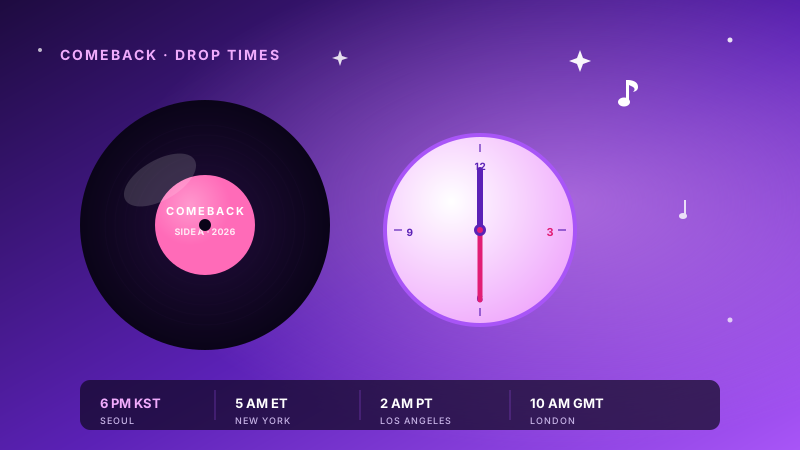
Release is almost always 6 PM KST. Convert that to your timezone once and save it — that is roughly 5 AM ET or 2 AM PT, so North American fans are usually asleep at drop. What happens that week is not just listening. Fandoms coordinate streaming that actually registers, and music-show voting runs on separate apps with its own rules and deadlines.
If the voting apps and the "pre-vote vs live-vote" split are new to you, how music-show wins and voting work breaks it down. For the full anatomy of a comeback cycle, start with how a comeback actually works.
The seven-day rule nobody explains up front
The number labels quote — "first-week sales" — is a strict seven-day count from release day, tallied by Hanteo and Circle. That is why fandoms push everyone to land their preorder inside that first week rather than buying casually a month later: a copy that arrives on day 20 is a lovely album but a zero on the chart. The mechanics, and which purchases count, are in first-week sales explained.
How to read our calendar without drowning in it
Two habits make a comeback calendar useful instead of stressful.
- Set your reminder two to three weeks early, not on the date. The date is the deadline; the preorder window is the thing you can actually act on. A reminder that fires the morning of release is a reminder to feel bad.
- Filter to the groups you follow. A raw month of comebacks is noise. Narrow it down, then work backwards from each date using the three windows above.
You can track upcoming releases on the comeback calendar and plan each one around its preorder window instead of its drop time.
Where this fits
- How a comeback actually works — the full cycle, start to finish
- Preorder K-pop albums from abroad — get the timing right
- First-week sales explained — why day 7 is the deadline
Last verified: August 2026. Comeback timelines shift by group and label; if a window has moved, tell us and we'll update.